
About the Project
A new tunnel will address the following concerns with the existing tunnels:
Aging infrastructure concerns – The existing tunnels, which were built in 1937 and 1958, have never been taken out of service because they must continuously carry flow.
Earthquake concerns – The existing tunnels are not built to modern earthquake standards, even though they cross two earthquake faults.
Overflow concerns – The capacity of the existing tunnels was almost exceeded twice during major rainstorms, including the rainstorms in January 2017 and February 2024. If the combined tunnel capacity is exceeded, partially treated or untreated wastewater would be discharged to surrounding waterways, resulting in poor water quality.
The Clearwater Project is a critical infrastructure initiative to protect local waterways and ensure the reliability of the Joint Outfall System (JOS), which serves over 5 million people in the Los Angeles basin.
The Planning Process
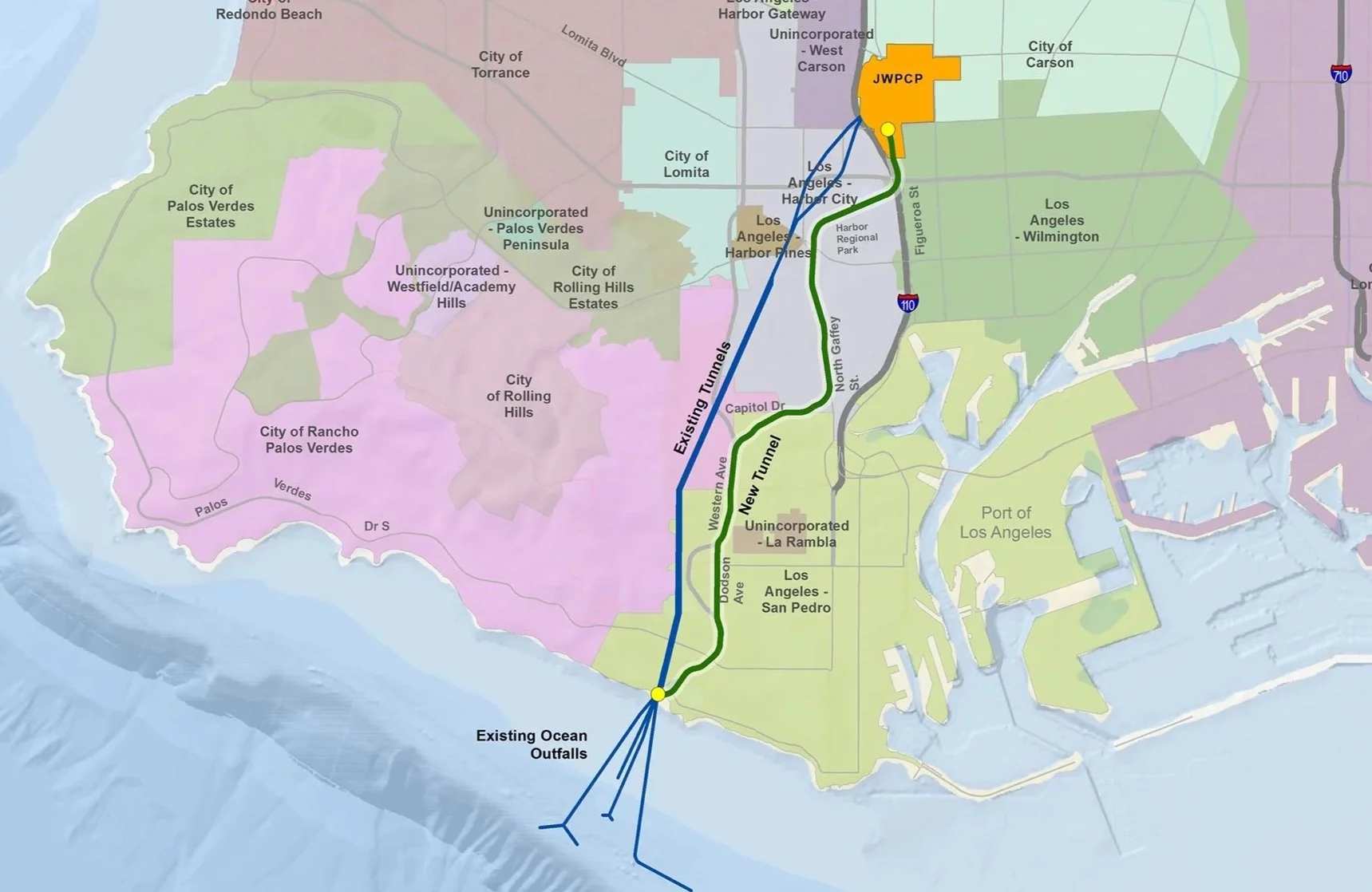
In 2006, the Sanitation Districts launched the Clearwater Program to develop a long-term Master Facilities Plan for the Joint Outfall System (JOS), evaluating infrastructure needs through 2050. The plan recommended construction of a new onshore tunnel to convey treated water from the Joint Water Pollution Control Plant in Carson to the existing ocean outfalls on the Palos Verdes Peninsula, improving system reliability, seismic resilience, and long-term performance.
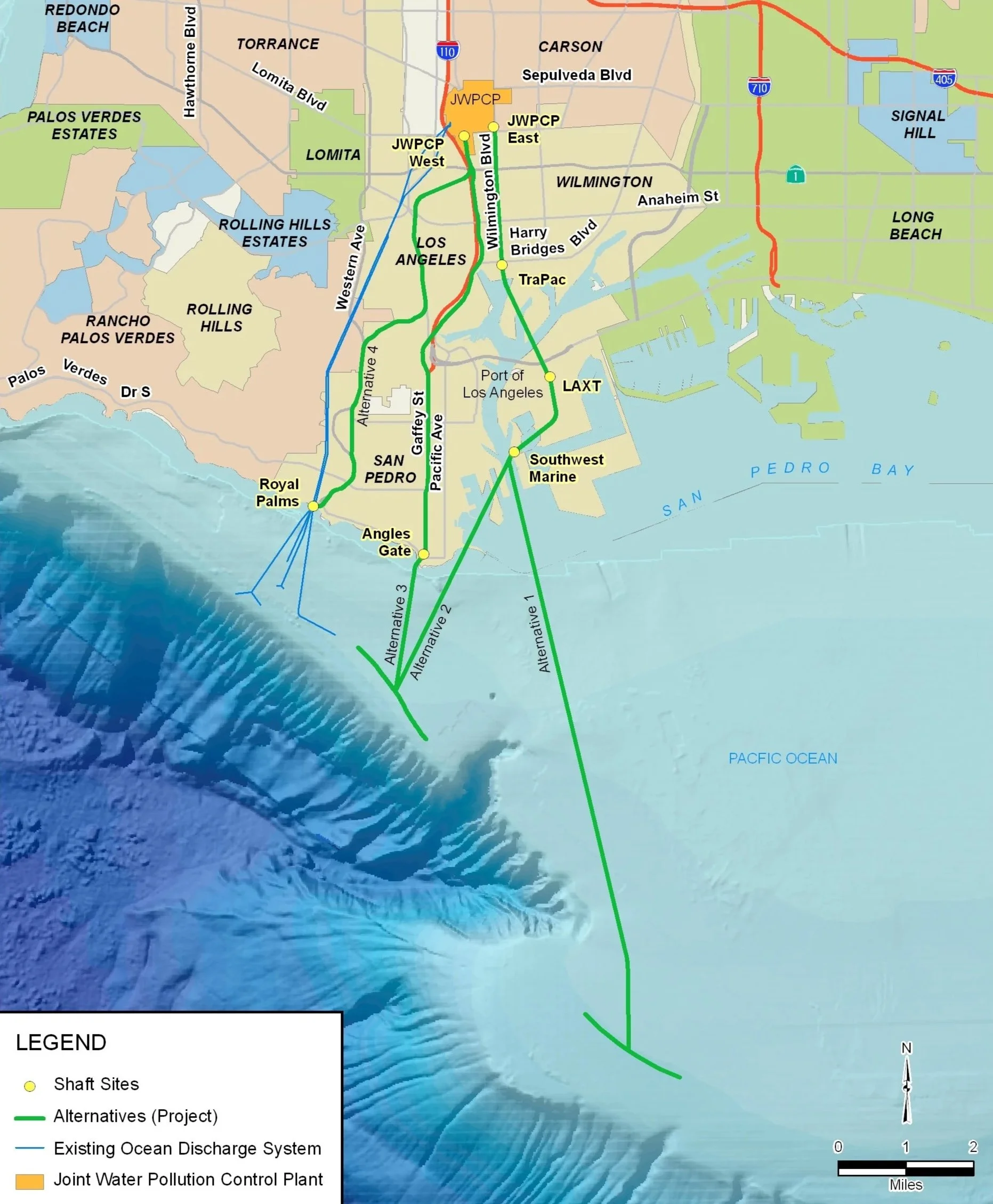
After evaluating 22 potential tunnel alignments and conducting more than 500 public outreach meetings between 2006 and 2012, the Sanitation Districts selected an alignment located almost entirely beneath public rights-of-way with no new ocean outfall. The Clearwater Project was approved by the Board of Directors in 2012 and is supported by detailed engineering design, geotechnical investigations, and coordination with local jurisdictions along the tunnel route.
Construction
Construction for the Clearwater Project began in 2019 in Carson and is currently anticipated to conclude around 2027 at Royal Palms Beach.
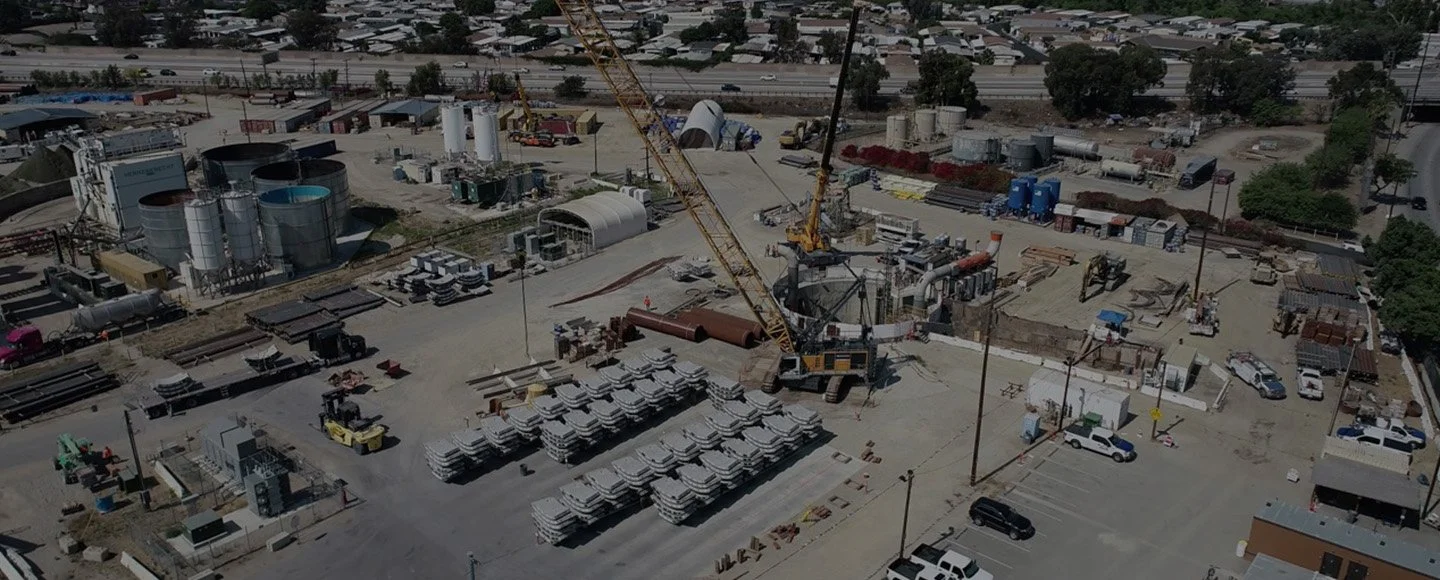
The project started at the Warren Facility with an access shaft, which serves as the entry and exit for workers, equipment, and tunnel materials. A 20-foot noise barrier separates the site from nearby sensitive areas. This is the starting point of the tunnel.
At Royal Palms Beach, the new tunnel will connect to the existing ocean outfalls. This is where the tunnel will end. Construction occurs Monday through Friday, with some parking unavailable, though the beach and parts of the lot remain open. Once complete, the site will be restored to pre-construction conditions.
Local Jobs
The Clearwater Project supports local jobs and boosts the economy through subcontractors, suppliers, and professional services, with at least 30% of craft labor performed by local residents and veterans.
Project Timeline
2006 The Sanitation Districts launched the Clearwater Program to develop a Master Facilities Plan for the Joint Outfall System through 2050.
2006 - 2012 The Sanitation Districts conducted over 500 public outreach meetings to ensure community input throughout the planning process.
Fall 2012 The Sanitation Districts Board of Directors approved the Clearwater Project and selected the tunnel alignment with the least environmental impacts.
2017 The Sanitation Districts submitted an Environmental Impact Report (EIR).
Spring 2017 Direct outreach to community members began, including one-on-one stakeholder meetings, community events, school presentations, and organized tours of the A.K. Warren Water Resource Facility (formerly the Joint Water Pollution Control Plant).
Summer 2017 The Clearwater Tunnel Project Facebook page launched as a source of information for community members.
Summer 2017 - Spring 2018 Public Workshops were held to brief coastal communities on the Clearwater Project and gather community feedback.
Fall 2017 The Clearwater Tunnel Project website launched as a source of information for community members.
Spring 2018 The Clearwater Project was granted a state coastal development permit (CDP) from the California Coastal Commission.
Fall 2019 Construction of the Carson tunnel access shaft began.
2020 Construction of the Carson tunnel access shaft continued through the COVID-19 pandemic, while community outreach meetings transitioned to virtual formats.
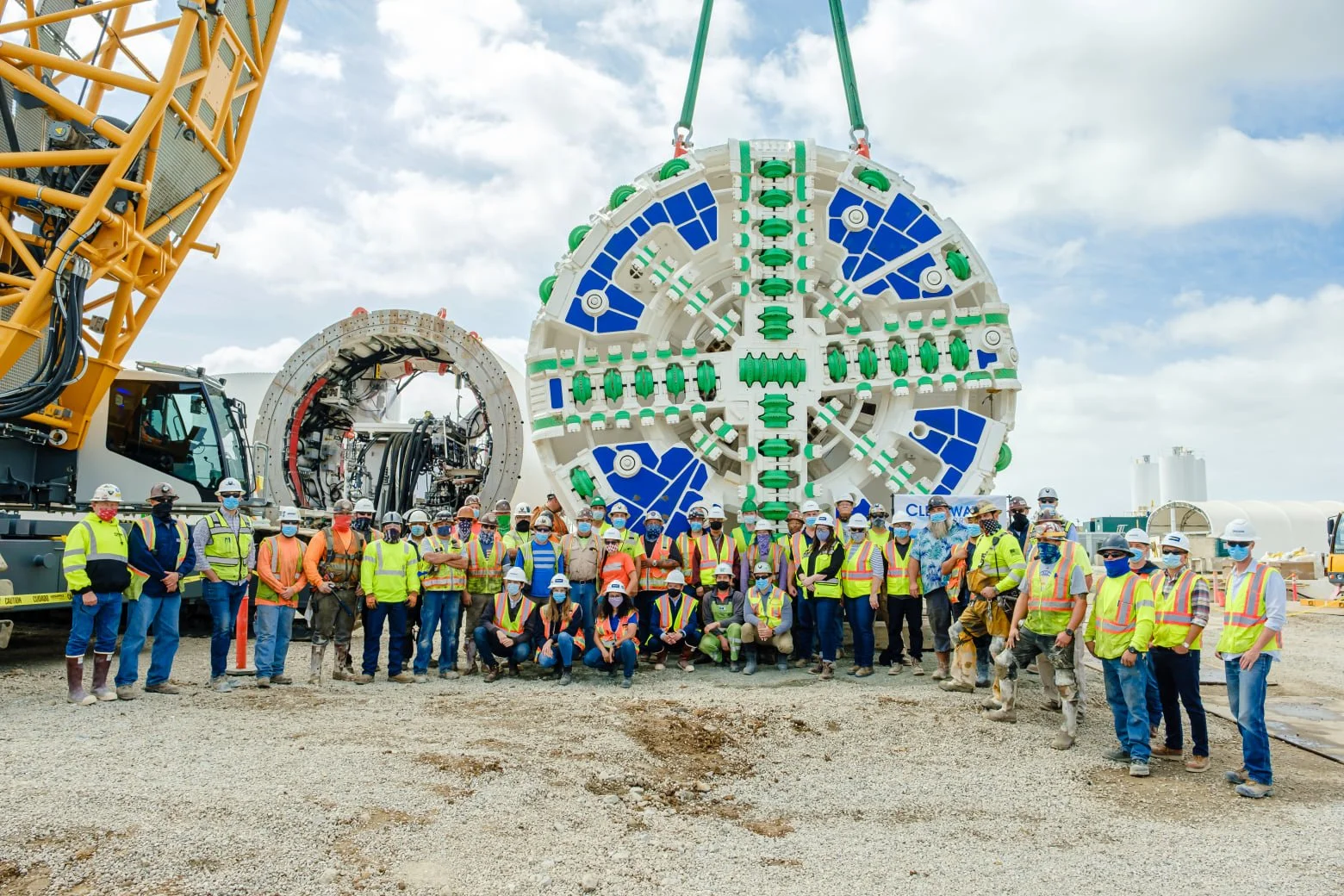
Fall 2020 Local students submitted tunnel boring machine (TBM) name ideas and artwork to be displayed on the tunnel. Rachel was selected in honor of Rachel Carson, a pioneer of the global environmental movement.
Spring 2021 Rachel, our TBM, was unveiled to the public in a launch ceremony, featuring the winning name and artwork displayed on the side of the TBM.
Summer 2021 Rachel is lowered into the shaft to begin assembly and testing.
Fall 2021 Rachel began tunneling. Ground monitoring sensors were installed along the tunnel alignment to safeguard the surface.
Fall 2022 The first mile of the tunnel was completed.
Spring 2023 Rachel reached the 2.5 mile mark underneath Gaffey Street.
Spring 2025 Preliminary construction begins at Royal Palms Beach .
Summer 2025 Rachel completes 5.9 miles of tunneling. Construction of the temporary sound barrier begins at Royal Palms Beach.
2027 The Clearwater Project is scheduled for completion, with all construction sites restored to their original conditions.
*Note: These dates are all subject to change